Pencilina: A Bold Sans Serif Font for Handmade Brands
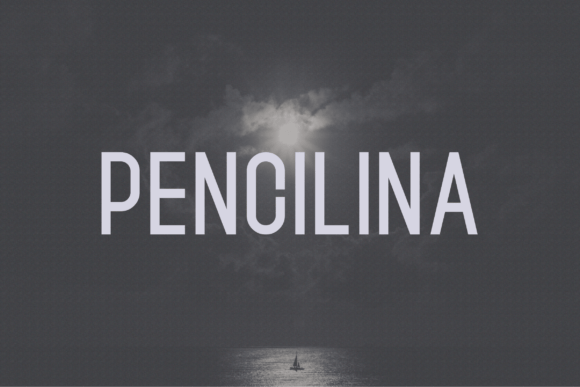
As a maker who designs printable invitations, cuts vinyl stickers for boutique goods, and prints labels for small-batch candles and soaps, I know how much a font can shape perception — before a customer even reads a word. That’s why Pencilina has become one of my go-to display fonts: it’s bold without shouting, modern without feeling cold, and all-caps sans serif without sacrificing warmth or clarity.
Pencilina isn’t just another sleek typeface. Its clean lines, balanced letter spacing, and confident weight give it presence on physical products — whether laser-cut from wood, printed on kraft tags, or heat-pressed onto linen tote bags. Because it’s built for impact *and* legibility, it works where other display fonts falter: on ¾-inch sticker rolls, tiny product labels, or SVG files scaled down for Cricut Explore Air 2 projects.
Where Pencilina Shines in Real Craft Projects
I use Pencilina most often where first impressions matter — and space is limited. Think:
- Candle and soap labels: Its strong uppercase forms hold up beautifully at 10–12pt on 2” x 1” adhesive tags, especially when paired with a subtle handwritten script for scent names (e.g., “Lavender & Sage” in Pencilina + “hand-poured” in a soft script).
- Wedding welcome signs and seating charts: The font’s even stroke weight and open counters mean it scans cleanly from across a room — no blurry edges, no lost letters under outdoor lighting.
- Digital printables: Planner covers, habit trackers, and wall art PDFs gain instant polish with Pencilina headings. It reads crisply at 300 DPI and converts smoothly to PNG or SVG for layered design tools.
- Seasonal packaging: From minimalist holiday gift tags to spring farmers’ market jar labels, Pencilina’s modern simplicity keeps the focus on your product — not the typography.
Readability & Production Tips You’ll Actually Use
Because I cut hundreds of vinyl decals each month, I pay close attention to how fonts behave in real-world production. Pencilina passes every test I throw at it:
- For Cricut and Silhouette users: No inner joins or fragile serifs to break during weeding. Letters like “A,” “R,” and “B” retain crisp definition even at 0.75” height.
- For printed cards and stationery: At 14–18pt, it’s highly legible on uncoated paper — no ink bleed or fuzzy edges, thanks to its generous x-height and consistent stroke contrast.
- For mockups and social previews: It renders cleanly in Canva, Adobe Express, and Procreate — no pixelation or odd kerning shifts between platforms.
That said, Pencilina is best used for short, high-impact text — headlines, titles, brand names, and decorative phrases. It’s not intended for body copy or long paragraphs (that’s where a friendly serif or neutral sans serif companion shines). But for anything you want seen, remembered, and trusted? It delivers.
Smart Pairings That Elevate Your Brand Identity
A great font rarely stands alone — and Pencilina’s strength lies in how well it plays with others. Its clean, confident base makes it the perfect anchor for expressive contrast. Try these combos in your templates and product bundles:
- Pencilina + a relaxed handwritten font: Use Pencilina for “Gather Co.” and a gentle script for “Handcrafted Goods Since 2019.” The contrast feels intentional, human, and memorable.
- Pencilina + a warm serif font: For wedding stationery or artisanal food packaging, pair it with a low-contrast serif like Playfair Display or Lora. The combination says “thoughtful, timeless, and trustworthy.”
- Pencilina + a geometric sans: If you’re building a cohesive digital product suite (planner kits, checklist bundles), layer Pencilina headers over a lighter, more neutral sans like Inter or Open Sans for subheads and captions.
Licensing, Formats & What You Need to Know
Pencilina is a premium font designed for commercial use — meaning you can confidently license it for client work, physical product labels, digital downloads, SVG files, and merchandise like mugs or tees. Just double-check the license terms before bundling it into editable Canva templates or selling OTF/TTF files directly.
The font includes standard OpenType features — basic ligatures, stylistic alternates, and multilingual support covering Western European languages (including accented characters used in French, Spanish, and German product names). File formats typically include OTF, TTF, and web-ready WOFF — useful if you ever expand into branded Shopify banners or email headers.
It doesn’t include swashes or decorative flourishes — and that’s intentional. Pencilina’s power is in its restraint. If your brand voice leans minimalist, earthy, modern, or quietly confident, this sans serif font won’t compete with your message. It’ll clarify it.
Why This Font Fits Your Shop — Not Just Your Design Software
When customers choose handmade over mass-produced, they’re choosing intention — in materials, process, and presentation. Pencilina supports that intention. It helps your candle label feel as carefully considered as the soy wax blend inside. It makes your wedding invitation suite feel cohesive from save-the-date to place card. It gives your Etsy banner the quiet authority that says, “This shop knows what it stands for.”
And because it’s versatile across mediums — screen, print, vinyl, embroidery digitizing (when used for outlines), and even chalkboard-style signage — you’re not buying a font for one project. You’re investing in a design asset that grows with your shop.
If you’ve been rotating through free fonts that blur at small sizes or look dated next to competitors’ packaging, try Pencilina. Not as a trend, but as a tool — one that makes your work look polished, professional, and unmistakably yours.